
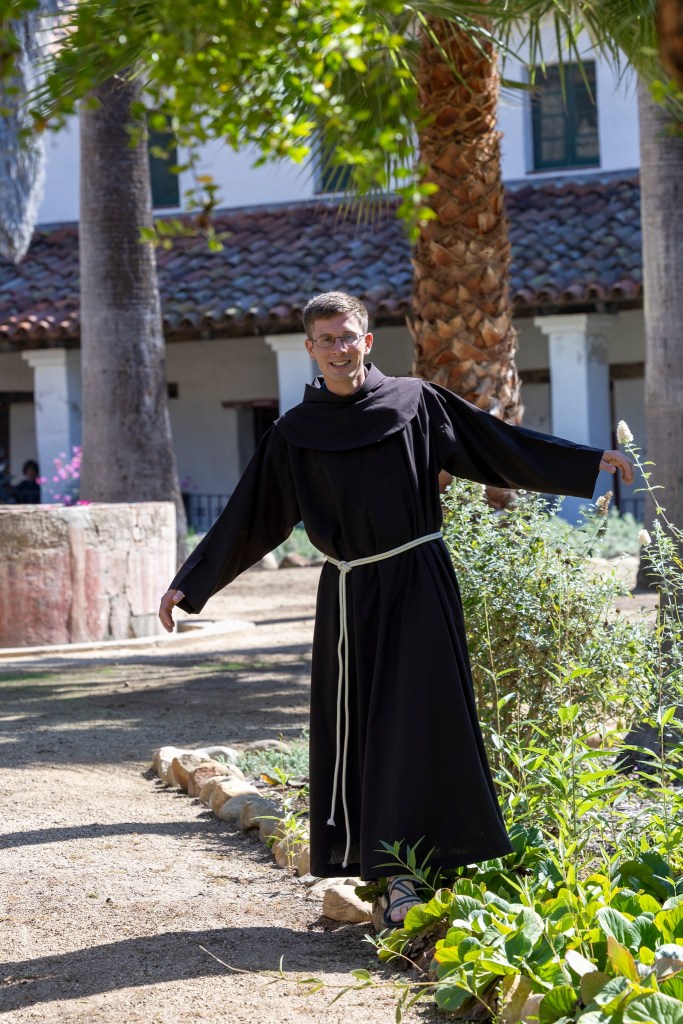
I can vividly recall sitting behind Br. Michael Rubus OFM Cap before Mass on March 19th, 2023. During a day when I felt “the call” throughout, I distinctly remember having no other care in the world besides just desiring to wear a Franciscan habit. From that day on, I decided to do everything in my power to become a Franciscan.
However, I believe the significance of receiving the habit can go back to around 1205 when St. Francis was brought before the Bishop by his angry father. Francis had just stolen many expensive pieces of fabric from his father’s store, sold them in a nearby town, and then given the money to a poor, abandoned church on the outskirts of Assisi. When Francis’ father demanded the money back in front of the Bishop and all those gathered around the public square, Francis not only returned the money but stripped naked and offered his clothes as well. The Bishop instinctively wrapped Francis in his mantle but from that moment on we are told Francis put on a “hermit’s habit” and began his active ministry. St. Bonaventure writes that it was a “poor, cheap cloak of a farmer who worked for the bishop.”
Some time later, Francis would come across the passage from Luke’s Gospel “Take nothing for the journey, neither walking stick, nor sack, nor food, nor money, and let no one take a second tunic” (Luke 9:3). Francis’ first biographer Thomas of Celano writes, “Immediately, he took off the shoes from his feet, put down the staff from his hands, and, satisfied with one tunic, exchanged his leather belt for a cord. After this, he made for himself a tunic showing the image of the cross, so that in it he would drive off every fantasy of demons. He made it very rough, so that in it he might crucify the flesh with its vices and sins. He made it very poor and plain, a thing that the world would never covet.”
By 1223, the following would be written in the Franciscan Rule concerning new brothers who wished to join the Order of Friars Minor:
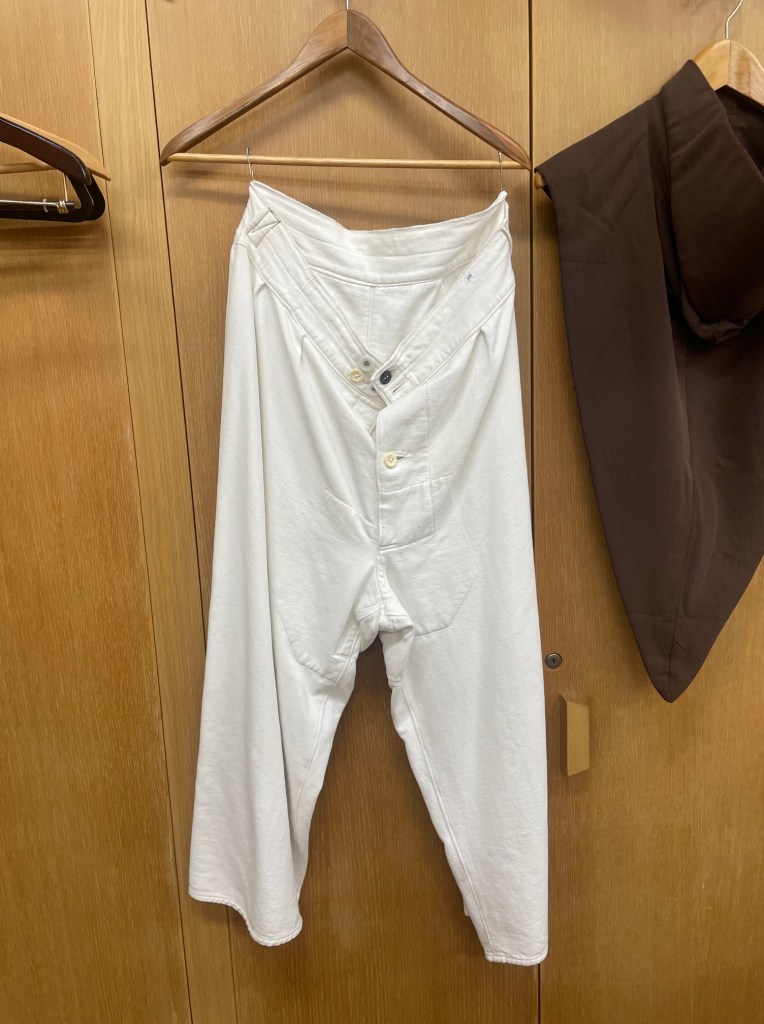
“grant them the clothes of probation, that is, two tunics without capuche, a cord, breeches, and a caparone extending to the cord… Having truly finished the year of probation, let them be received to obedience, promising to observe always the life and Rule.”
Before his death in 1226, Francis dictated the following in his final Testament in regards to the early Brothers:
“And those who came to receive life gave whatever they had to the poor and were content with one tunic, patched inside and out, with a cord and short trousers.”
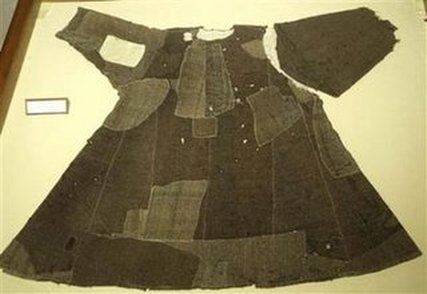
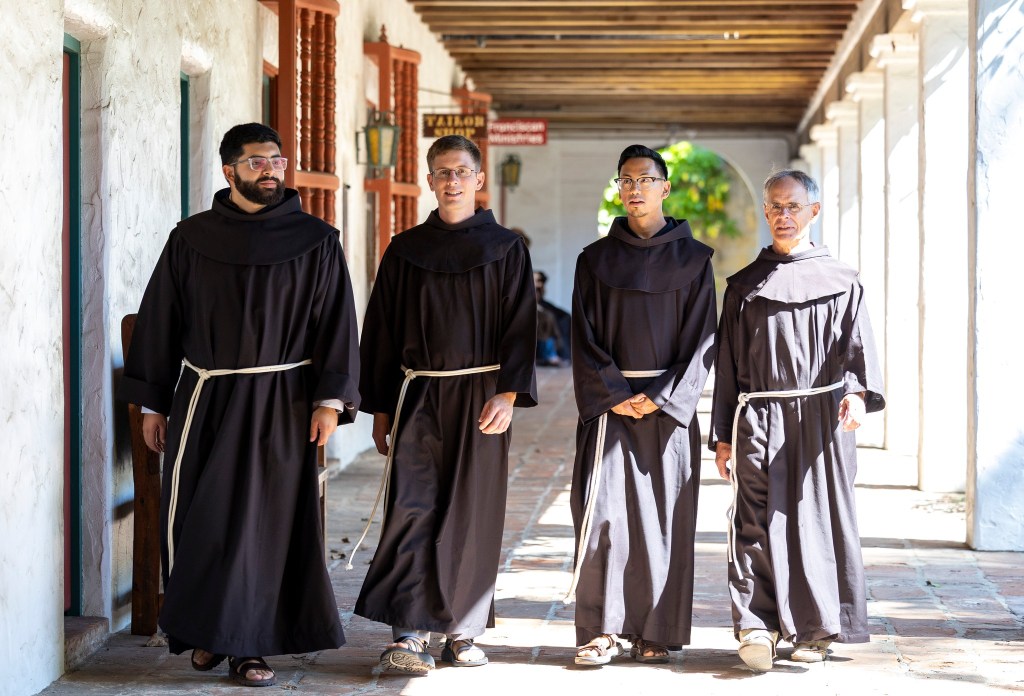
There are many debates and secret resentments amongst the friars concerning habits. Should they be worn more often to promote evangelization or less often to avoid attitudes of vanity and clericalism? Should habits be tattered and patched in order to smell like the sheep or should they be cleaned and well-cared-for to be presentable and fitting for liturgy? Should habits be worn with sandals or shoes? Should novices receive new habits or ones passed down from deceased friars? Should novices receive only one habit or multiple for liturgy and work? Should friars wear a Crown (Rosary) with the habit as well?
These passive aggressive dinner table debates do not even consider the questions which the tailors find most pertinent like the fabric, the shade of brown, length of the cowl (hood), quantity and location of pockets, country of origin, etc.
There are also the warnings about what people will shout out when walking down a busy street. I am well aware that I must be prepared to be called both “Friar Tuck” (Robinhood) and a “Jedi” (Star Wars).
Then there are all the questions people will ask related to living with the habit. What do you wear underneath? How do you use the bathroom? I have been told that when the Dominican novices receive their white habits, they are treated to a spaghetti and meatball dinner the very first night as a test! Many of these concerns are humorously, and practically, covered by Casey Cole, OFM on his YouTube channel.
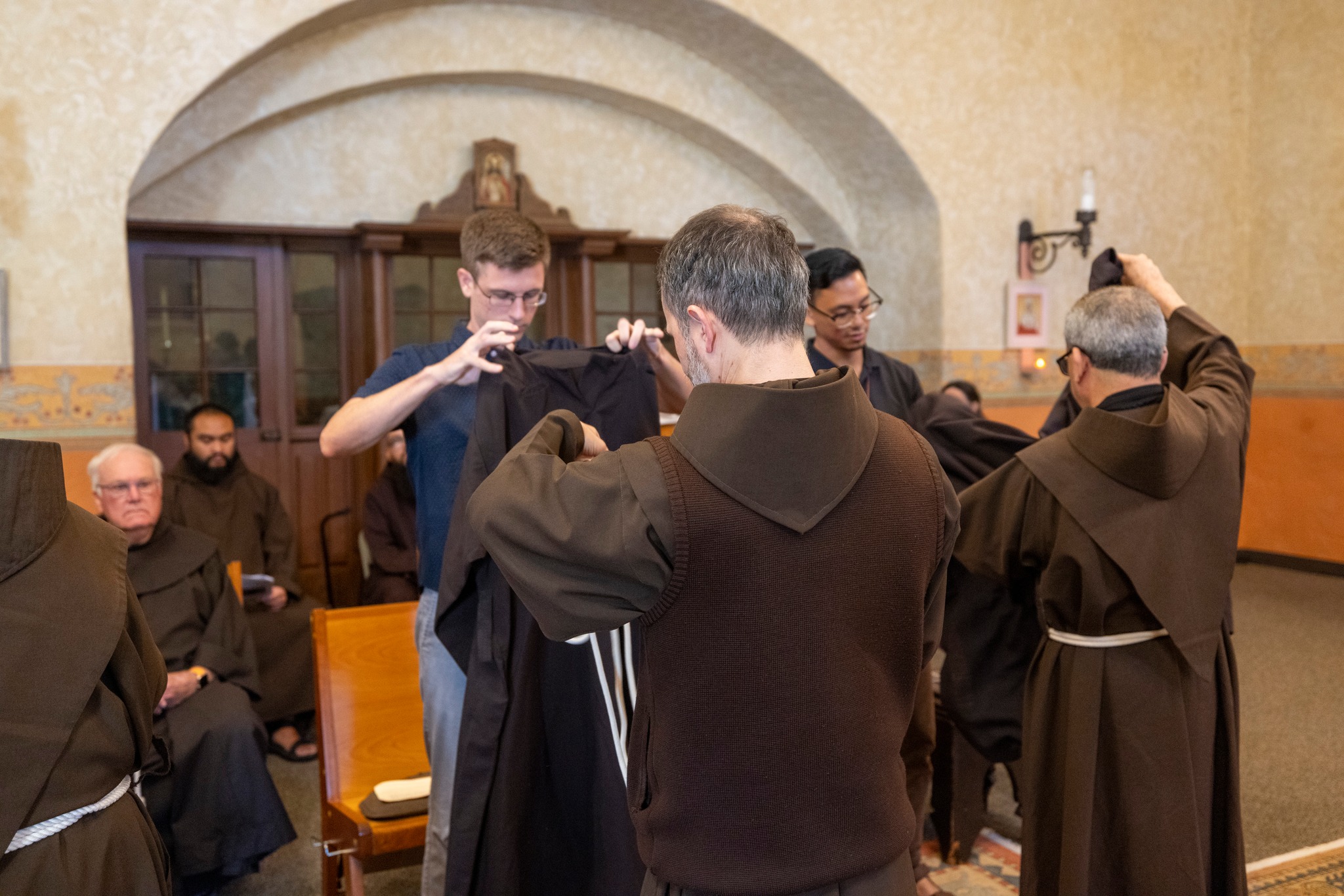
The moving ritual of receiving the habit, known as Investiture, can only be fully understood in relation to the other rituals that occur during the novitiate year. On the first day, we were received into the novitiate, becoming Brothers in the Order, a significant change from the previous year of Postulancy. A few weeks later we had a rite of divestiture where we looked deeply into our lives and sought which possessions, both material and spiritual, we need to divest from. Then a few weeks after that we had the reception of the Rule and Constitutions, so that we may become more fully aware of exactly what we’re signing up for in this life. On the final day of novitiate there will be (God-willing) the profession of first vows in which we profess to live a life of chastity, having nothing of our own, and in obedience for one year. On that day of profession, the three knots symbolizing the vows are finally added to the cord.
It is with those other rituals in mind, that the beauty of this outward symbol of faith becomes apparent to me. From now on, I will have clothes reminding me of my commitment to be countercultural for the sake of the Gospel. From now on, I will have a constant reminder draping over my shoulders that I am part of an Order, and a Church, that is much bigger than just myself.
It has been about 820 years since St. Francis first put on the religious garment. It has been about 1,300 days since I first even considered donning a Franciscan habit, and 928 days since I sat behind Br. Michael at Mass in March of 2023 and first discerned it was God’s will for me to be a Friar. But hey, who’s counting?




The uniform of the non-violent man will be simple, in conformity with the dress of the poor, and betokening humility. Its purpose will be just to keep him from heat and cold and rain…
M. K. Gandhi, Non-Violent Resistance, 92-94


 Kevin's Corner
Leave a reply to Debra Hallett Cancel reply