
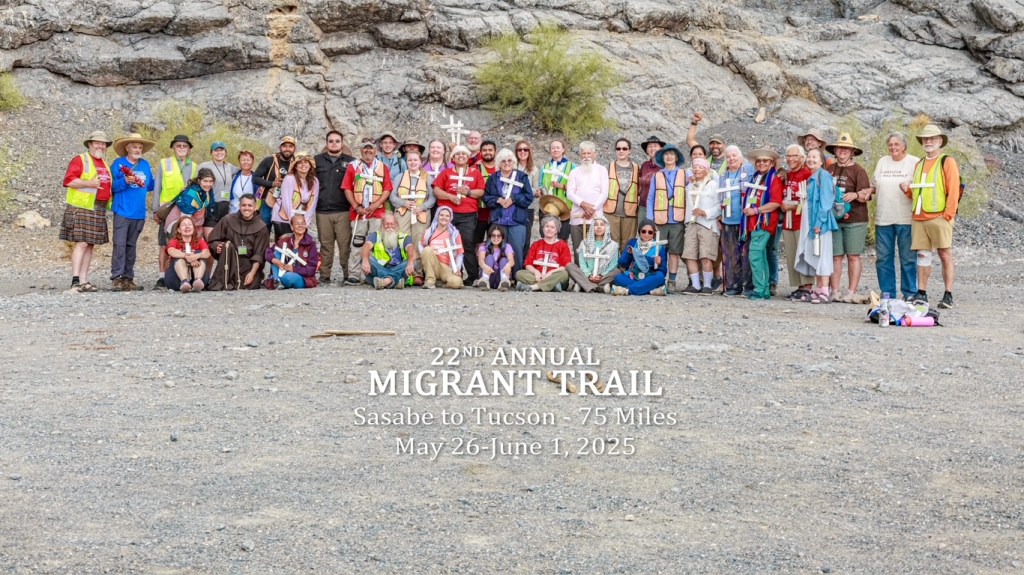
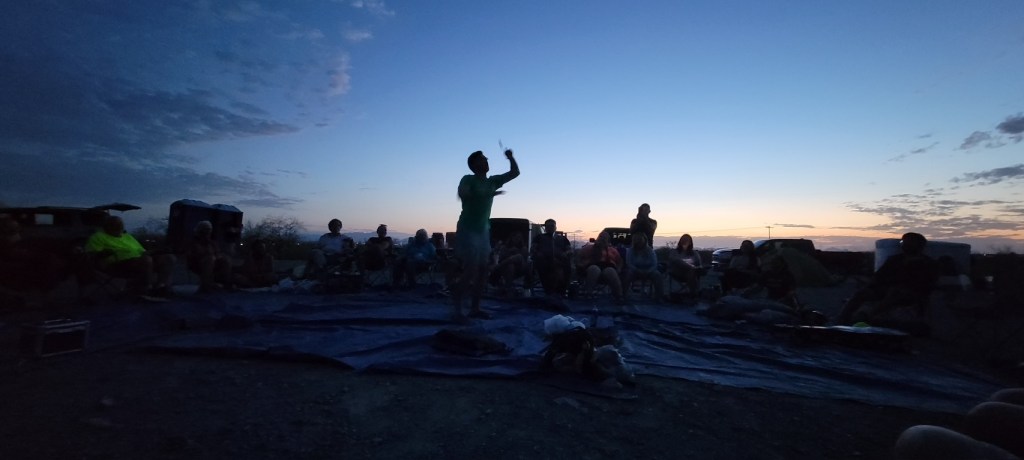
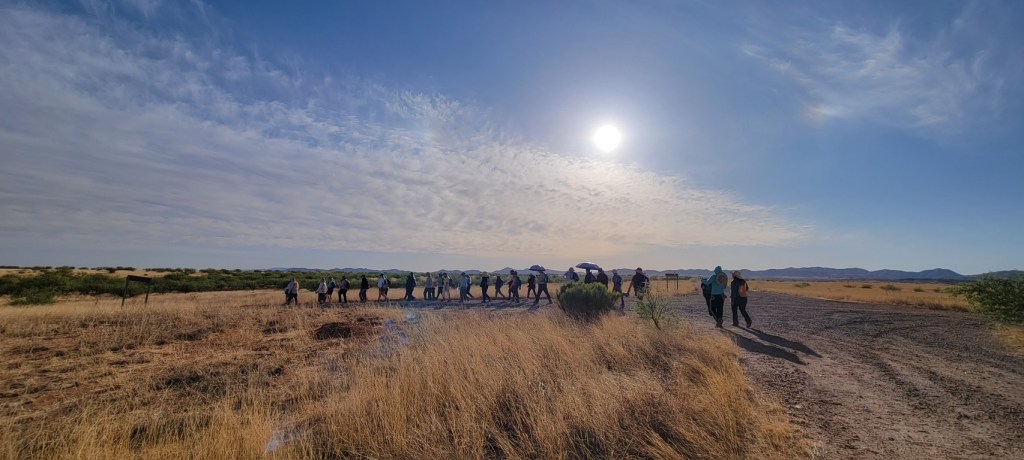
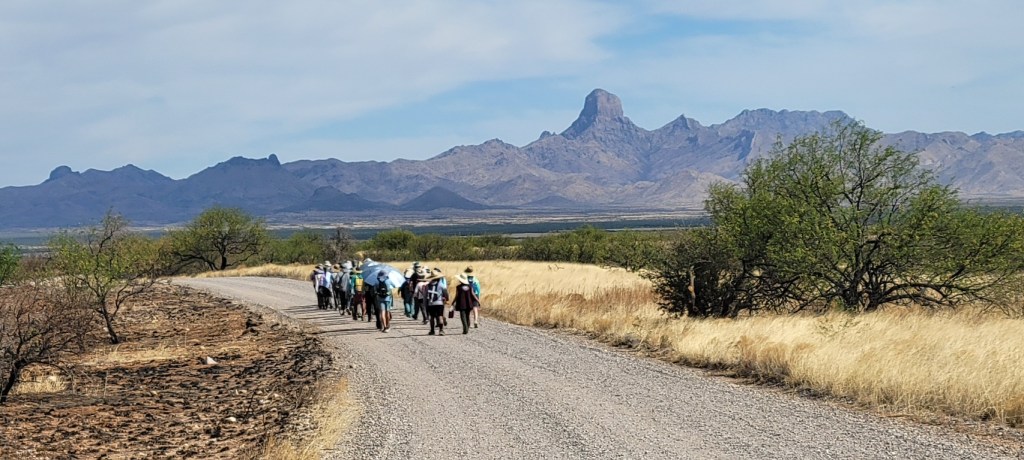
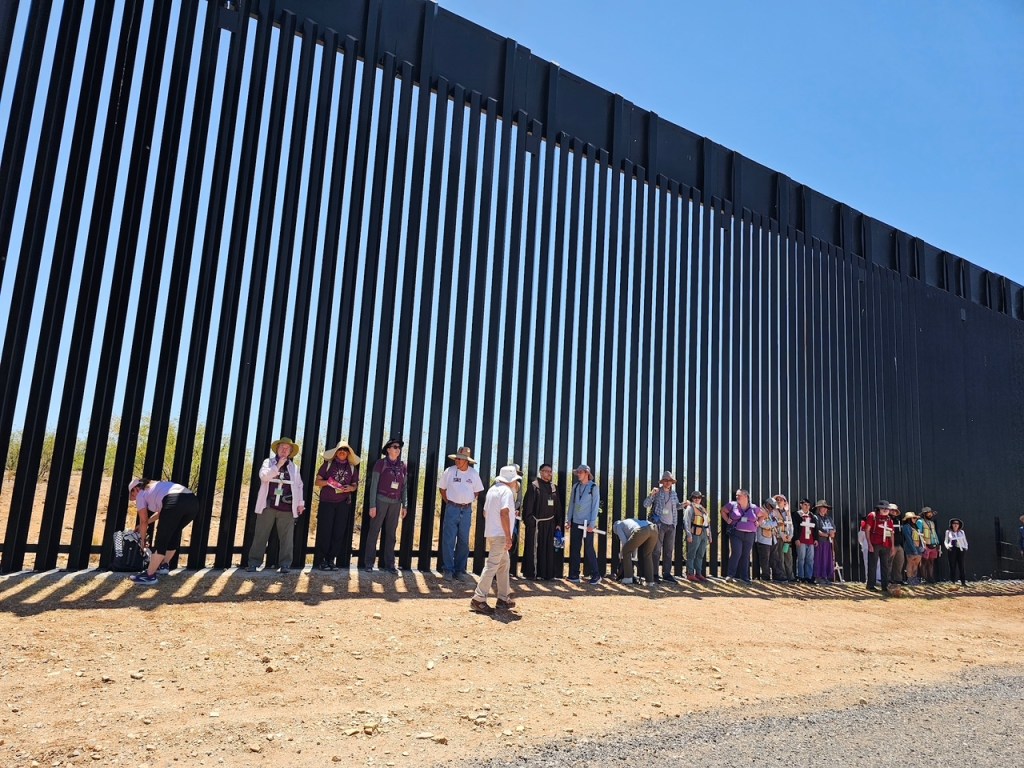
Last week I embarked on a 75 mile walk from the border wall to Tucson known as the Migrant Trail Walk which has a 22 year tradition. I decided to join the walk because of the positive testimonies of Franciscans who walked in recent years. Additionally, I knew that our postulant program would end with a southwest tour so being in Arizona that week fit well in my schedule. After reflecting on the week, which was perhaps the most emotionally and physically draining week of my life, I laugh at those reasons for walking.
The ultimate reason I am thankful for participating is because of the witness it holds to the deaths of many migrants trying to cross the border. The constant oppressive heat for miles and miles caused me to think about those who I miss most, the family and friends who I wanted so dearly to sit with around the dinner table. Those family and friends span the political, social, and spiritual spectrums and it proved difficult to find truthful words that would be well received by all in a public reflection like this one. Each has their own position on immigration policy, and the role the Church should play in those policies.
However, as I went through the names of those family and friends that I wanted to share something cold and refreshing with (ice cream, beer, a jump off the diving board, a trip to the beach, etc.) I came to the realization that the common denominator between all those people is a care for human life. It is that passion for human life and dignity for all from loved ones back home that carried me through the most difficult miles in the desert.
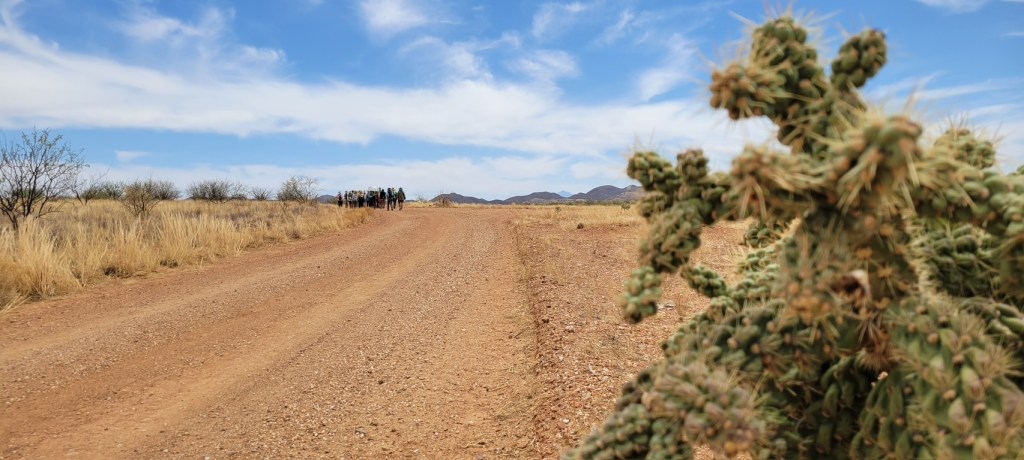
I learned many Spanish words during the walk. I learned that those tall cacti you see on postcards from Arizona are called Saguaro. I learned that some smaller cacti are called jumping cholla because the thorns are so loosely attached to the cacti that they seem to jump off as you walk by and hook into your skin. The safety team had to continuously walk with combs to brush these cholla off unfortunate walkers. I learned that espinas are the thorns that kept lodging into the bottom of my sandals and poking through to my feet. Speaking of feet, I learned that ampolla is the Spanish word for blister that walkers kept using over and over. Ironically, the only blister I got during the week was on my hand while digging a hole for the biodegradable bags carrying the community’s human waste (that’s a story for another time).
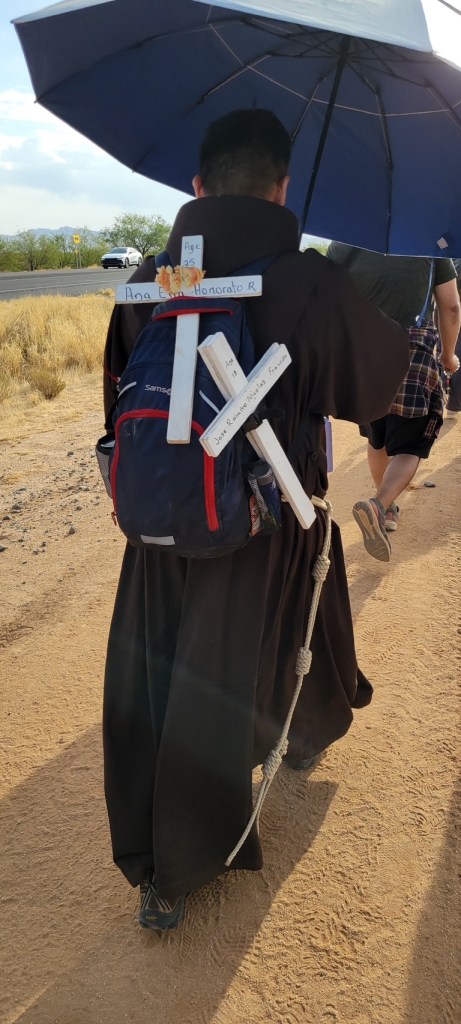
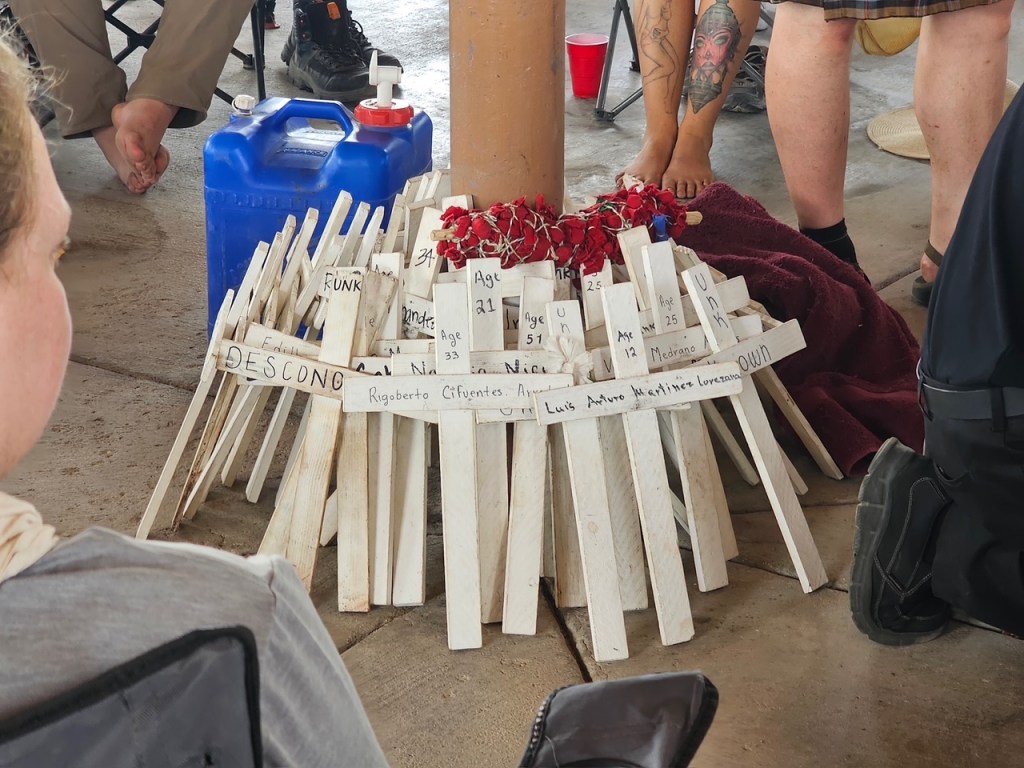
However, the most important Spanish word that I learned during the walk is desconocido/a. This word for “unknown” was the most commonly found on the crosses that we carried throughout the entirety of the walk. The crosses represented the humans found dead in the desert by humanitarian groups. There were 154 bodies found in that county in the last year alone. Some human remains are found with identification nearby, therefore many crosses had names, like the one I carried for the 75 mile journey, Heriberto Echeverría. However, the desert often takes such a scary and heart-wrenching toll on the corpses that all there is to put on a cross of remembrance is desconocido. As we approached each water stop, about every 1.5 miles, we would say these names followed by the group response “presente” meaning that these lives are not forgotten and lost but are remembered, honored, and present with us as we walk.
Not everyone on the walk was a practicing Christian, and as I’ve written above, not everyone reading this reflection will agree on immigration policy. However, I hope all that read my reflections do have the care for human life. I hope all can remember death in their own family and acknowledge that no human deserves the title “unknown”, that each of these people were coming from a home, in search of a safer and more secure home. It was the constant reflection on that truth, mixed with the draining desert sun, that caused me to break down into tears as we reached our final destination one full week later. My prayer is that this common cherishing for human life can be the foundation for all bipartisan talks on immigration policy moving forward.
 Kevin's Corner
Leave a comment