
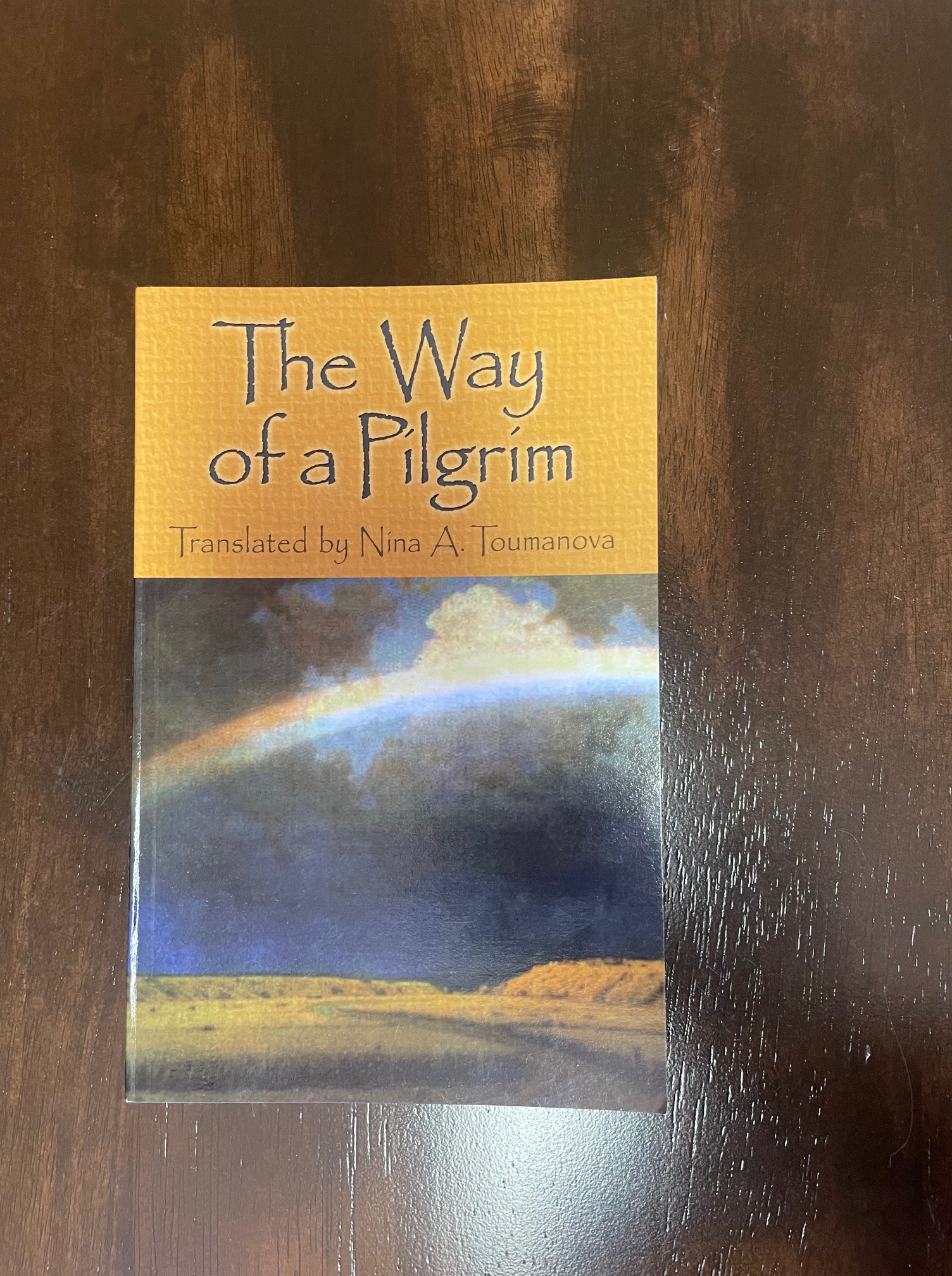
J.D. Salinger, perhaps best known for his book The Catcher in the Rye, wrote a lesser known work titled Franny and Zooey in which the main character (Franny) reads The Way of a Pilgrim and is dealing with the corresponding spiritual aftermath. It leads the reader wondering, “What is so special about this book The Way of a Pilgrim that an author like Salinger would devote so much energy convincing others to read it?”
I first read The Way of a Pilgrim in June of 2020. It is one of the few books in my life that I have returned to over and over in its completeness. I love the work so much that I have the opening lines memorized by heart… “By the grace of God I am a Christian, by my deeds a great sinner, and by calling a homeless rover of the lowest status in life.”
Early in the book, the wanderer is directed to a monastery where the abbot instructs him,
“You will learn how to master [incessant prayer] by reading this book, which is called the Philokalia; it comprises the complete and minute knowledge of incessant inner prayer, as stated by twenty-five Holy Fathers. It is full of great wisdom and is so useful that it is regarded as the first and best guide by all those who seek the contemplative, spiritual life… Thus the Holy Scripture is like the resplendent sun, while this book – the Philokalia – may be compared to the piece of glass which permits us to contemplate its lofty magnificence.”
So if you are following, the argument roughly goes that J.D. Salinger wrote Franny and Zooey so that people would become familiar with The Way of a Pilgrim which was perhaps written so people would become familiar with The Philokalia. Confused yet?

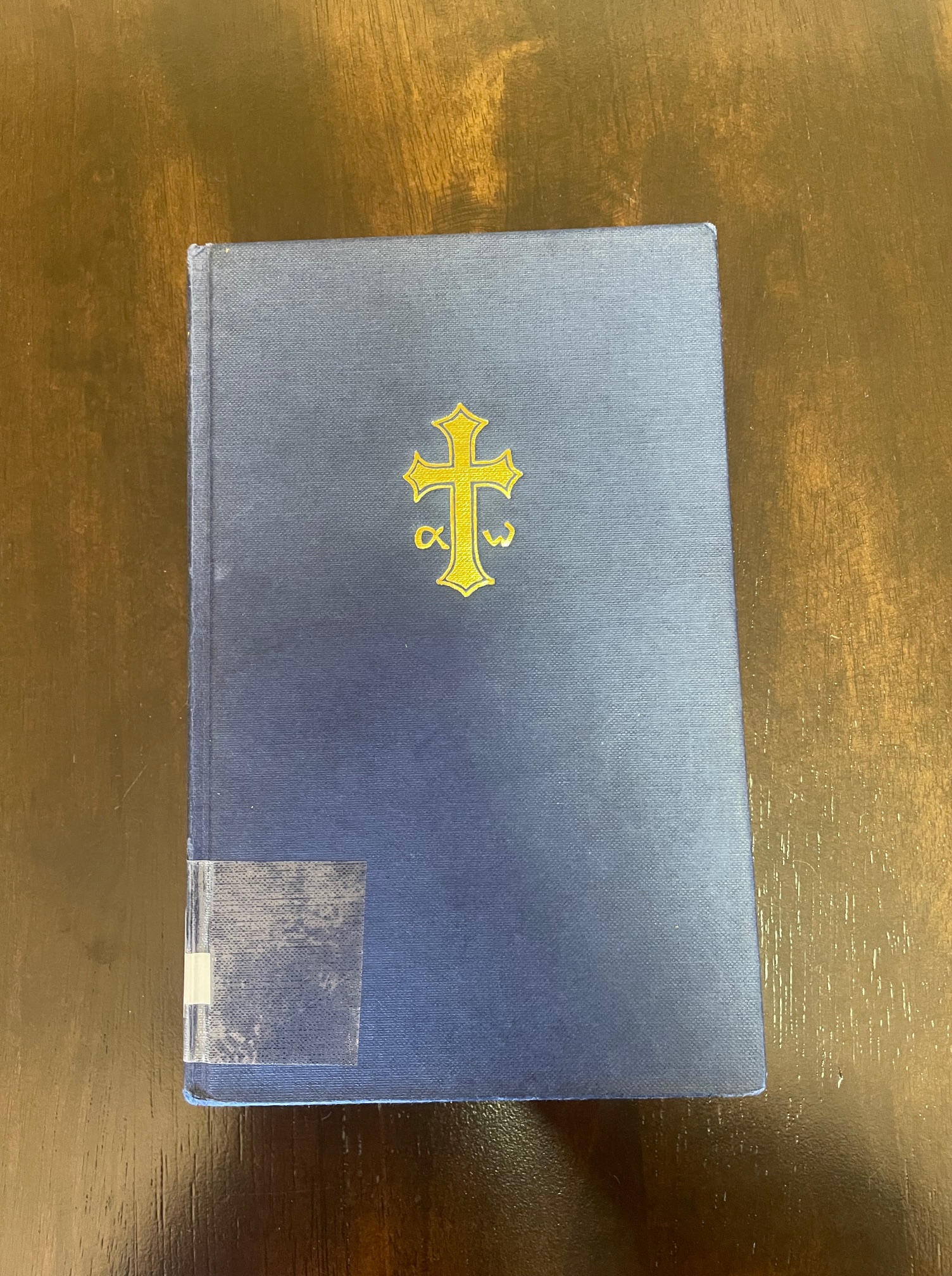
Recently, I found The Philokalia in the library at the Capuchin Novitiate library in San Inez, CA. If I’m being perfectly honest, before I saw it on the shelf I thought The Philokalia may have been a work of fiction, just a made-up title to help add flavor to the pilgrim’s story.
The Philokalia was compiled in the eighteenth century but it contains texts from between the fourth and fifteenth century. The Philokalia makes clear the centrality and importance of the word hesychia. In the introduction of the edition which I found, it describes hesychia as “a word which not only bears the sense of tranquility and silence (hence our translation: stillness) but also is linked through its Greek root with the idea of being seated, fixed, and so of being concentrated.”
In the back of the book there is a glossary full of Greek words and their corresponding definition relative to the book. The entry of hesychia reads as following:
“Stillness (ἡσυχία – hesychia) : from which are derived the words hesychasm and hesychast, used to denote the whole spiritual tradition represented in the Philokalia as well as the person who pursues the spiritual path it delineates… a state of inner tranquility or mental quietude and concentration which arises in conjunction with, and is deepened by, the practice of pure prayer and the guarding of heart and intellect. Not simply silence, but an attitude of listening to God and of openness towards Him.”
A stillness which is not simply silence. As my novitiate experience comes to an end, I can’t help but consider development of this spiritual stillness to be the goal of novitiate. It requires an act of divestiture, removing distractions like phones, television, family, friends, and pets back home. It requires wrestling with a state of boredom within the paradoxical context of solitude and community. At times in silence and solitude it can feel like 99% boredom and 1% hesychia. This novitiate year has taught me the tools to increase that 1%, not just during the privileged context of novitiate, but also moving forward back into the “real world.”
Further Scripture to reflect on:
The word shows up scarcely in the New Testament. It is sometimes used to denote ‘silence’ in a negative or misogynistic way, as in the Pharisees were silenced by Jesus’ response (Luke 14:4) or how St. Paul urged women to be instructed “silently and under complete control” (1 Tim 2:11). However, in Luke 23:56, the word is used to describe how the disciples rested on the Sabbath according to the commandment.
Source: Philokalia, translated by Palmer, Sherrard and Ware. Faber and Faber Limited, 1979, Great Britain.
 Kevin's Corner
Leave a comment